Why Your Engagement Rate Is Misleading And What to Measure Instead
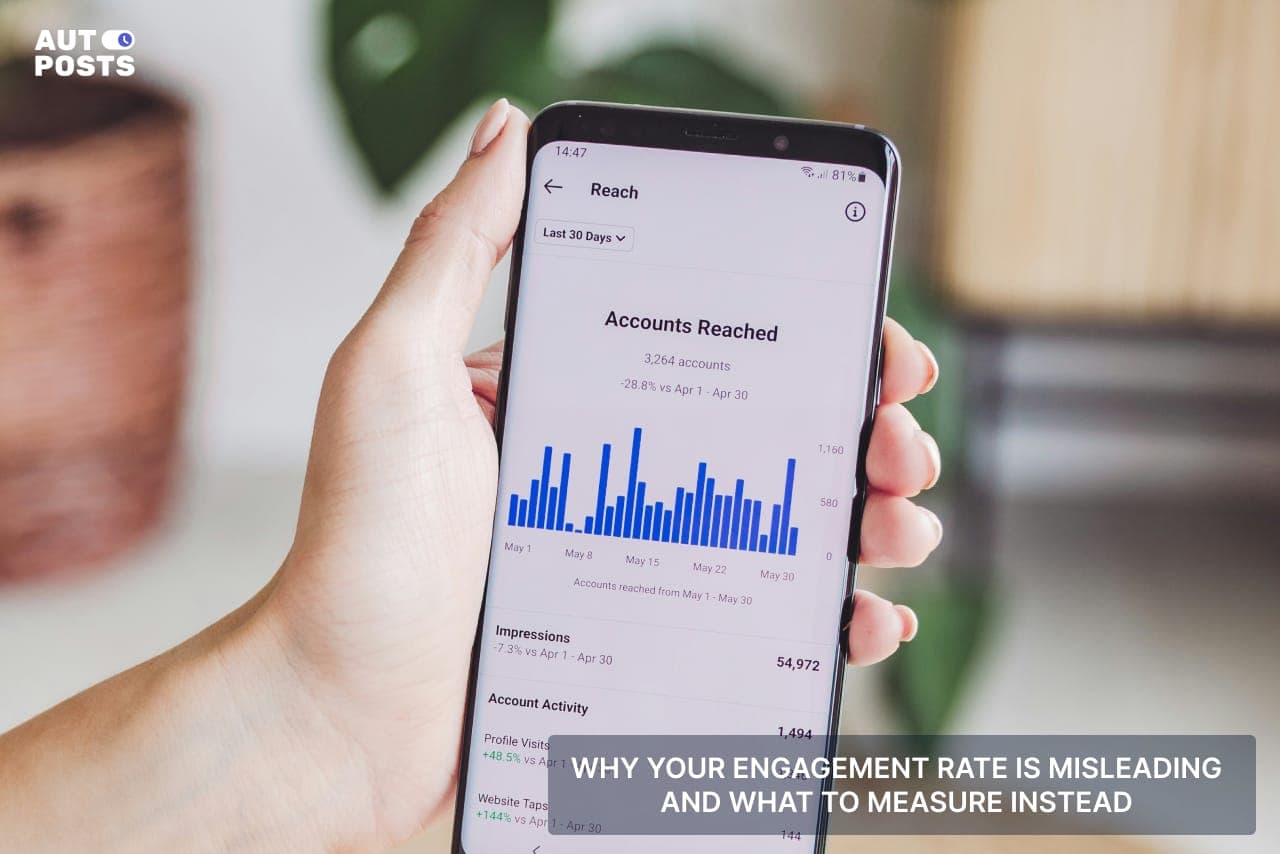
In 2025, engagement rate is one of the most overrated metrics in social media marketing.
It looks nice on a deck. It feels good when it's high.
But here’s the truth no one wants to admit, a decent engagement rate doesn’t mean your content is actually driving growth, conversions, or long-term value.
And if you’re basing your strategy on viewing likes and comments on social media tools? You could be scaling the wrong things.
In this post, we’ll break down:
-
Why traditional engagement metrics are deeply flawed
-
How they mislead creators, marketers, and brands alike
-
And most importantly, what to measure instead if you actually want to grow with purpose.
Let’s start
The Engagement Illusion: 3 Big Problems With Relying on This Metric

Opening up an engagement rate calculator and checking those reports feels like a safe bet. It’s easy to calculate and gives you a sense of how people are interacting with your content.
But here’s the reality: engagement rate is often a misleading signal because;
1. It Doesn’t Reflect Business Outcomes
A post with 500 likes and 120 comments doesn’t mean you made a sale, captured a lead, or moved someone down the funnel.
High engagement ≠ high impact.
Marketers chasing engagement often forget the end goal: revenue, conversions, loyalty. Without tracking how that post leads to an action, you’re celebrating noise.
2. It Varies Wildly by Platform & Audience Size
Engagement rates are not universally comparable.
Instagram averages might sit at 1-3% while Twitter (X) is way lower. TikTok looks inflated because of its viral mechanics. And the bigger your audience gets? The lower your engagement tends to drop.
So unless you're segmenting by platform, audience size, and industry… you're benchmarking blind.
3. It Incentivizes Low-Value, “Viral-Optimized” Content
Let’s be honest: it’s tempting to post memes, polls, or hot takes that rack up likes fast. But do they actually build authority, trust, or sales intent?
Probably not.
Engagement-first strategies often kill brand depth in exchange for cheap hits, which might help the algorithm, but not your business.
What to Measure Instead: 6 Metrics That Actually Drive Growth

Since we have discussed why engagement isn’t a “rely on” metric, here are 6 metrics that you should be tracking because they:
-
Give better insights than engagement rates
-
Help a business make more profits
1. Click-Through Rate (CTR)
CTR measures how many people saw your post and clicked.
It’s a direct line from content to action. When someone clicks, they’re showing active interest in your offer, blog, product, or funnel. This makes CTR the earliest signal of buyer intent in the content journey.
High CTR usually means your hook, value prop, or CTA is working, and when it’s low, it tells you exactly what needs testing.
Bonus: You can track CTR across platforms (social posts, Stories, email, ads), making it one of the most consistent cross-channel indicators of performance. Forget chasing likes.
2. Saves and Shares
Saves mean your content has so much value that people want to revisit it. That’s a high signal of information density or problem-solving quality.
Shares, on the other hand, show trust: your audience is willing to put their own reputation on the line to spread your message. That’s organic distribution at scale, without spending a dime.
Unlike engagement rate, which lumps everything together, these metrics deserve to be tracked individually because they hint at long-tail growth. Content that gets saved and shared often performs better in-platform (thanks to algorithm boosts) and also drives more traffic and brand recall over time.
3. Direct Messages (DMs)
A direct message isn’t just a simple comment, it’s a one-on-one conversation, a private signal that someone is interested enough to reach out.
Whether they’re asking for more info, inquiring about your product, or requesting a demo, DMs are intent-driven, meaning the person is far deeper into the funnel than someone merely liking a post.
Plus, when tracking DMs, you’re getting a direct line to people who are on the edge of making a decision. High DM volume usually means your content is hitting the mark and converting leads.
In other words, DMs are the conversation that signals a real buyer.
4. Conversion Assists
Conversion assists track micro actions that push people further down the funnel.
These could be actions like signing up for a newsletter, adding items to a cart, or watching a product demo. Quite like behind-the-scenes activities that eventually lead to conversions (sales, sign-ups, etc.), but don’t always get the spotlight they deserve.
For example, a social post that sparks someone to click through to your website might not convert immediately, but it assists a conversion later down the line. Tracking these assists reveals the true impact of your content on sales and how it nurtures leads.
5. Scroll Depth & Time-on-Page
Scroll depth and time-on-page metrics show how deeply people are interacting with your content.
A high scroll depth tells you that people are reading all the way to the end, and time-on-page indicates that they’re not just glancing over your content before moving on to something else.
This is real engagement, showing that your audience finds your content relevant and valuable enough to invest time in. These metrics are powerful for blog posts, long-form content, or video.
6. Returning Visitors
When it comes to measuring true audience loyalty and sustained interest, returning visitors are the metric that you should check.
Unlike one-time viewers, people who return to your content or website are actively choosing to engage with your brand again. This signals long-term value, and it’s a critical predictor of growth. High returning visitor rates often correlate with strong brand loyalty and content that resonates deeply, making them a more reliable indicator of future sales and retention.
The Impact Framework: How to Rethink Your Social KPIs
If you’re still measuring social media success with basic metrics like engagement rates, you’re likely missing the bigger picture.
The Impact Framework is a model designed to shift the focus from vanity metrics to KPIs that directly contribute to business growth. This framework is a way to transform your social media strategy into a growth engine.
Step 1
Match your KPIs with the customer journey. You can’t just track likes or comments and call it a win; those numbers don’t reveal anything about the true value your content brings.
Instead, track conversion assists, the micro-actions that nudge people closer to a purchase, such as signing up for a newsletter or engaging with a product demo. Use these metrics to plan and schedule content that aligns with your customers' intent and the stages of their journey.
Step 2
Next, stop treating social media as a short-term game. If you want to build a loyal, long-term audience, track customer retention and customer lifetime value (CLV).
These metrics offer a far clearer picture of your brand’s sustained impact and help measure whether your content is actually creating relationships.
What the Best Brands Are Measuring in 2025 (Case-Inspired Insights)

In 2025, leading brands are shifting their focus from traditional metrics to more meaningful indicators that drive business growth.
Here are 5 metrics that are used by some of the most popular brands.
Earned Media Value (EMV):
Brands like Netflix and Spotify are leading the charge by using influencer partnerships to amplify their reach. In 2024, Spotify achieved an impressive 83% creator retention rate, boosting its EMV across platforms like Instagram, TikTok, and YouTube.
Share of Voice (SOV):
This metric helps brands understand their presence in the market compared to competitors. It measures the volume of brand mentions across various channels, providing insights into brand visibility and consumer perception.
Customer Lifetime Value (CLV):
Instead of focusing solely on immediate sales, brands are now calculating the total revenue a customer is expected to generate over their entire relationship with the brand. This approach helps in identifying high-value customers and tailoring marketing strategies accordingly.
Brand Health Metrics:
Metrics like sentiment analysis and brand influence are gaining traction. These indicators assess public perception and the impact of brand messaging, allowing companies to adjust strategies in real-time.
Conversion Assists:
Rather than attributing success to a single touchpoint, brands are recognizing the value of multiple interactions that lead to a conversion. Tracking these assists provides a more comprehensive view of the customer journey.
Wrap-Up:
Wrapping it up, despite engagement rate offering valuable insights into how your audience interacts with your content, it's crucial not to treat it as the be-all and end-all metric for success.
Brands that have truly cracked the code on growth understand that engagement is just one piece of the puzzle. What truly matters is how those engagements translate into real business outcomes.