How to Use Micro-Batch Content Creation as a Solopreneur
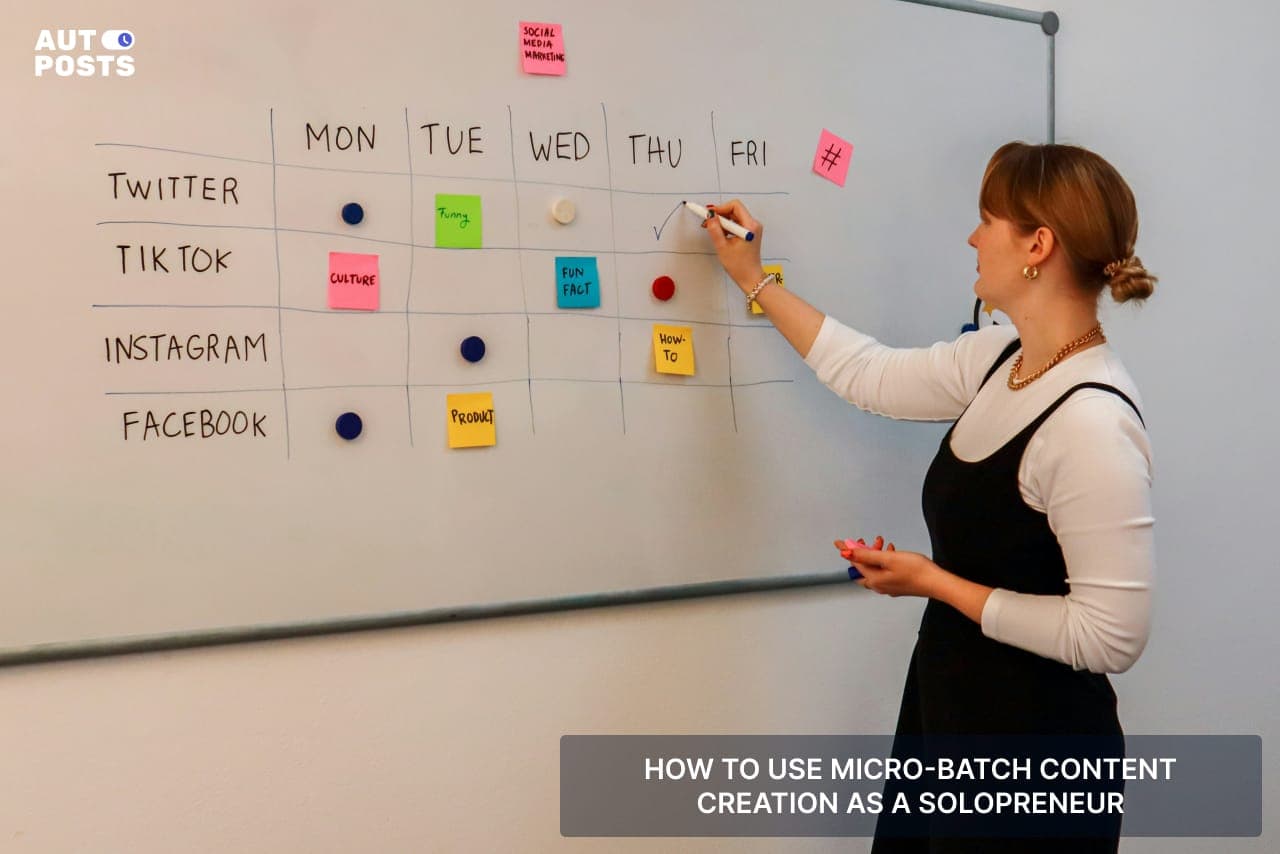
For many solopreneurs, content creation is one of the first tasks to slip through the cracks.
Between managing clients and driving growth, sitting down to create weeks of content often turns into an overwhelming and time-consuming process.
The result is a cycle of inconsistency; sporadic posting, missed opportunities to build visibility, and unnecessary stress around marketing.
A practical alternative is micro-batch content creation.
It works like producing content in smaller, focused sessions that fit naturally into a busy founder’s schedule.
This article examines how micro-batching operates, why it aligns with the realities of solopreneurship, and how platforms like AutoPost.io can transform the process into a repeatable, data-driven system.
How to Use Micro-Batch Content Creation as a Solopreneur:

Step 1: Define 2–3 Core Content Pillars
Every solopreneur needs clarity on what their content is meant to achieve.
With defined pillars, every micro-batch session has a direction, preventing the “blank page” problem.
Instead of asking “what should I post?” the focus shifts to “how can I serve my audience within these themes?”
Over time, pillars ensure content is not only consistent but strategically reinforces the founder’s positioning.
Pro Tip: Audit the last 10 posts. Which ones drove the most engagement or inquiries? These are signals for what should become pillars.
Step 2: Collect Raw Material Daily
Great content is curated from real conversations and experiences.
Founders can build a lightweight system to capture raw material: notes from sales calls, customer FAQs, screenshots, or even quick audio memos.
The key is logging these insights daily, so micro-batch sessions start with a “content vault.”
Instead of forcing creativity under pressure, founders refine existing raw ideas. This habit compounds quickly, turning everyday work into fuel for months of content.
Example: A founder answering the same client question five times in a week can turn that into a micro-video, LinkedIn post, and carousel: three assets from one raw input.
Step 3: Schedule Short Micro-Batch Sessions
Traditional batching often fails because it drains content marathons.
Micro-batching flips the script: founders commit to short, focused sprints (20–30 minutes) where the only goal is progress on a small piece of content.
For example, Monday’s session might focus solely on drafting captions, Wednesday’s on visuals, and Friday’s on final polish. Here’s a table for better understanding:
Traditional Batching vs. Micro-Batching
| Approach | Time Investment | Sustainability | Stress Level | Output Consistency |
|---|---|---|---|---|
| Traditional Batching | 4–6 hrs block | Low | High | Inconsistent |
| Micro-Batching | 20–30 mins | High | Low | Steady & Scalable |
Step 4: Convert Raw Material into Finished Posts
Execution is where micro-batching shines.
During each sprint, founders pull from their raw material vault and move pieces into finished posts.
A 30-minute session might produce two captions, a TikTok draft, and a LinkedIn snippet.
Over weeks, this builds a rolling content bank that’s always ahead of schedule. Once finished, posts can be stored, scheduled, or repurposed across channels.
Pro Tip: Work in “content clusters.” If one idea works on TikTok, draft a variant for Instagram Reels and LinkedIn in the same session to maximize ROI.
Step 5: Use Tools to Automate Scheduling and Analytics
Manually posting is where solopreneurs lose momentum.
Once posts are ready, automation ensures consistency without extra effort.
Tools like Auto Posts allow founders to upload micro-batched content, schedule weeks ahead, and track real-time performance across TikTok and Instagram in a single dashboard.
This removes guesswork; data shows what works, so future sessions double down on proven formats. By combining micro-batching with automation, founders achieve a scalable system that grows without burning time daily.
For example, a solopreneur using AutoPost.io can dedicate just 90 minutes a week to creation and still maintain a 30-day pipeline of scheduled content.
How The Psychology Of Micro-Batching Works:
Content creation is about psychology.
The reason micro-batching works so well for solopreneurs is that it aligns with how the brain naturally handles focus and momentum.
Why Short Sprints Beat Marathons for Creative Output
The human brain is wired for short, focused bursts of creativity.
Long marathon-style content days often backfire, and quality drops with each passing hour. In contrast, micro-batching leverages cognitive freshness.
A 20–30 minute sprint allows full focus on one type of task, visuals or video outlines, without draining energy.
Over time, these sprints compound into more output with less exhaustion.
Founders who adopt this model not only produce more content but maintain sharper creative judgment.
Reducing Decision Fatigue with Structured Sessions
Decision fatigue is the silent killer of productivity for solopreneurs.
Every time a founder asks, “What should I post today?” mental energy is wasted before execution even begins.
The fewer micro-decisions made in the moment, the more brainpower is reserved for creativity and strategy, the areas where founders add the most value.
Pro Tip: Assign each micro-batch session a single focus. Never mix brainstorming with polishing; separating the two keeps energy focused and output cleaner.
How Micro-Wins Fuel Long-Term Consistency
Consistency doesn’t come from willpower.
Micro-batching creates a series of quick wins that reinforce progress.
Completing two captions in a session may not seem monumental, but it builds a psychological loop: small victories trigger motivation, which encourages repetition.
Over weeks, this rhythm evolves into consistency, and consistency compounds into authority and audience trust.
The power of micro-wins is not just in the content bank created, but in the sustainable habit formed, a system solopreneurs can actually maintain for years, not weeks.
How To Avoid Common Mistakes in Micro-Batching
The method is powerful, but execution matters.
Many solopreneurs abandon micro-batching not because the framework is flawed, but because of a few avoidable mistakes in setup and follow-through.
Over-Polishing Instead of Publishing
One of the biggest traps solopreneurs fall into is spending too much time tweaking a single piece of content.
Micro-batching thrives on momentum.
The goal of each session is to move content from “idea” to “ready,” not “perfect.”
Over-editing stalls progress, kills output, and leaves the pipeline dry. Adopt the 80/20 rule: 80% polished and posted is better than 100% perfect but never published.
Batching Ideas, But Not Execution
Another common mistake is gathering a ton of raw ideas but failing to convert them into finished posts.
Idea collection is only one part of the system. If it isn’t paired with scheduled micro-sessions for drafting and finalizing, the vault becomes cluttered and overwhelming.
Solopreneurs should map their process as a pipeline: Idea → Draft → Polished → Scheduled. Progress only counts when content moves forward in the pipeline.
Table: Healthy vs. Broken Micro-Batch System
| Stage | Healthy System | Broken System |
|---|---|---|
| Idea Vault | Filled and regularly used | Overflowing, untouched |
| Drafts | Converted into weekly sprints | Sitting half-finished |
| Scheduled | Always 2+ weeks ahead | Empty, last-minute panic |
Ignoring Consistency When Sessions are Skipped
Micro-batching is powerful because of its rhythm.
The biggest mistake founders make is treating skipped sessions casually.
Missing one sprint may feel harmless, but it breaks momentum and reduces trust in the system. The fix is not perfection, but recovery: if a session is skipped, reschedule within 24 hours to protect consistency.
Treating Tools as Optional Instead of Essential
Many founders try to micro-batch manually, calendars, and posting reminders.
This works temporarily but breaks under scale.
Auto Posts removes this friction by storing drafts, scheduling weeks of posts, and surfacing performance data.
When tools handle the operational side, founders can focus entirely on creative execution.
Final Thoughts:
At its core, micro-batch content creation is about shifting from reactive posting to intentional execution.
Short, structured sprints prevent burnout, reduce decision fatigue, and create a rhythm that supports long-term consistency.
When founders treat content as a system, measured and refined, it stops being a daily struggle.
Micro-batching is more about working sharply. With the right rhythm in place, content stops being a burden and starts becoming momentum.