9 Common Mistakes in Building a Social Media Strategy
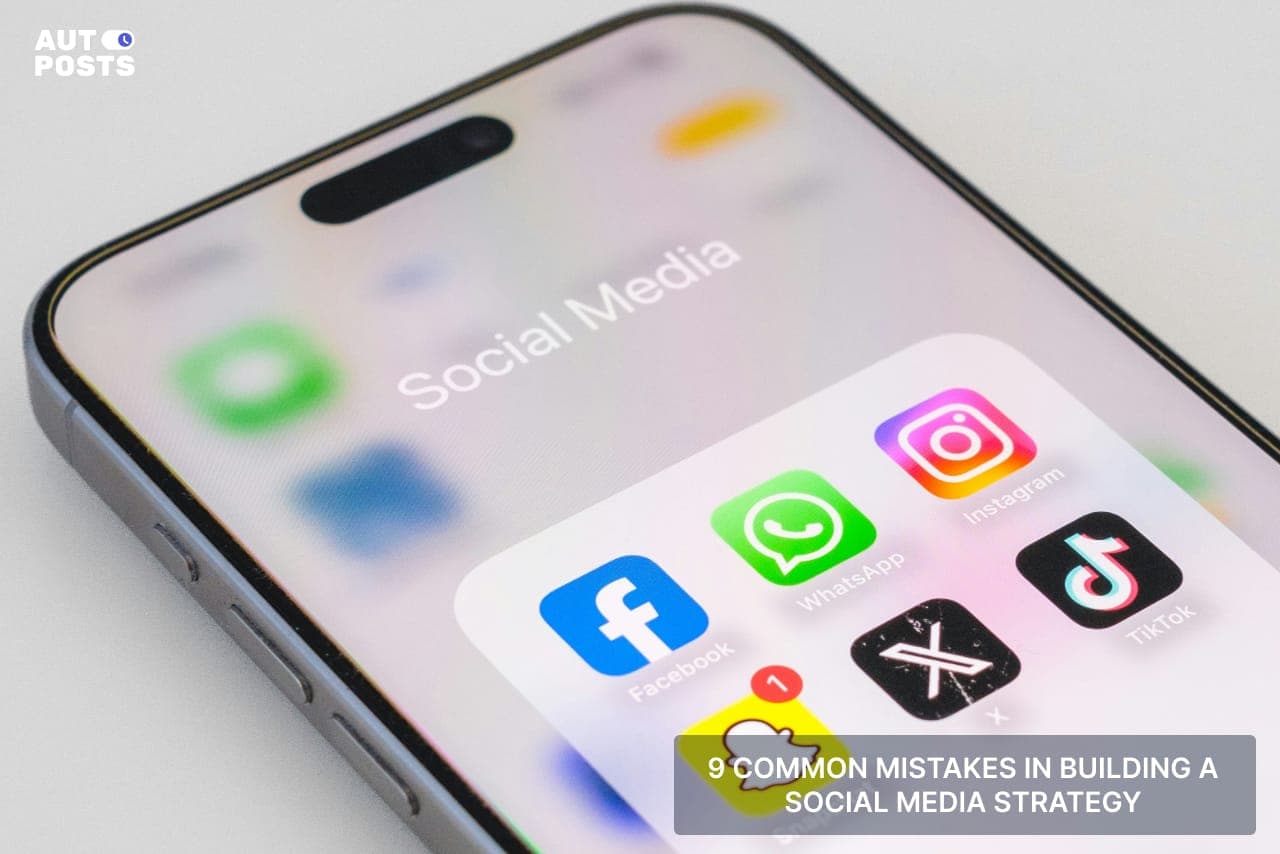
When it comes to social media strategies, most startups try to jump in without having a solid know-how of how SM strategies work.
They post content randomly, over-promote, neglect analytics, try to become a jack of all trades, or fail to interact with their audience.
The results?
Low engagement, decreasing motivation, and finally, zero growth.
But what if we told you all this is avoidable?
All it takes is understanding these pitfalls and ensuring your startup is moving in the right direction.
So, let us help you by discussing 9 key steps to build an effective social media strategy.
Social Media Strategy Checklist: 9 Steps to Get It Right

#1: Use Data & Statistics to Plan an Effective Strategy
Almost every business makes an SM strategy based on a plan.
But, one of the most common mistakes is coming up with a random plan that isn’t based on statistics but observations.
For instance, a local coffee shop might post daily pictures of their chilled latte mixed with extra flavoring.
This idea could work for Arizona, where most come to enjoy a scenic view. But it won’t work in NYC, where everyone craves a strong cappuccino to open their eyes and get back to work.
Similarly, your business needs to understand its demographics and design a campaign that will attract the right people. Without the right audience, even 100,000 followers won’t matter much. (more on it in tip#9).
#2: Don’t Become a Jack of All Trades:
As a founder, you must’ve heard:
“Businesses must be available across every social media platform.”
Well, that’s wrong!
Many startups try to be active on every social media platform simultaneously, assuming they all work the same way. While they don’t!
Think about a fitness startup that tries to post workout tips on Instagram, LinkedIn, and Twitter. Sooner or later, they will realize that LinkedIn isn’t meant for engaging or fun reels. As a result, their efforts feel scattered, and none of their accounts gain real traction.
Instead of trying to master everything at once, start with one or two platforms where your audience is most active. For example, a fashion brand should focus on Instagram and Pinterest, while a B2B company might thrive on LinkedIn. Learn each platform’s best practices.
#3: No Social Media Guidelines
A well-defined social media policy ensures consistency and prevents missteps.
A classic example is when Domino’s Pizza faced backlash in 2009 after an employee posted a joke on the company’s Twitter account that was seen as offensive. The company had to issue an apology, delete the post, and revise its social media policy.
To avoid such issues, make a social media policy from day 1 and guide the employees about what to share and avoid.
#4: Monitoring Customer Engagement
Social media isn’t just about selling your products. Treat it like a two-way conversation.
Many businesses make the mistake of ignoring customer comments and messages, making their audience feel unimportant.
To build customer loyalty, always respond to messages and deal with your customers' issues. Even if a user leaves a negative review, give a polite reply and try your best to solve their problem. This builds trust.
#5: Using Social Media Tools
Using social media tools can streamline your workflow and maximize efficiency.
As an example, take a small e-commerce brand that relies solely on free tools.
With 5-10 orders a week, this looks super easy and manageable. However, once the number goes over a hundred, the store won’t be able to schedule posts consistently.
That’s why we recommend startups to try AutoPosts.io.
A perfect SMM tool that allows you to plan your posts weeks before and post them across multiple platforms with a click.
As easy as it sounds.
#6: Prioritizing Engagement Over Engagement
Almost every fresh startup believes in the theory:
“High followers = Success”
This is why many new brands even go into the dilemma of purchasing fake followers or getting paid shoutouts so they can just increase that number.
But followers don’t mean much if they’re not engaging with your content or converting into customers.
These numbers look quite impressive for an average social media user, but when the brand posts:
Zero engagement, Zero Sales, Zero results.
Instead of chasing followers, focus on engagement. Post valuable content, run interactive polls, reply to comments, and encourage discussions.
A smaller, engaged audience is far more valuable than a large, inactive one.
#7: Posting Consistently
Inconsistent posting is also one of the most common mistakes in a social media strategy.
As a startup, if you’re building a social media strategy where posting 10x a day would feel effective, and the next 2 days are for rest, the idea is flawed already.
People like balance, and they appreciate consistency. No one likes to be spammed by the same name every time they open Instagram or Facebook.
Here are three practical tips for maintaining a healthy posting schedule:
-
Follow the 80/20 Rule: 80% of your content should be entertaining, informative, or helpful, while only 20% should be promotional.
-
Use a Content Calendar: Plan your posts to stay consistent without overwhelming your audience.
#8: Optimizing Your Profile
Your social media profile acts as your digital storefront. If it looks incomplete or unprofessional, customers will lose interest.
Let’s take the example of a local sports retailer.
They might be posting super-engaging content but without a proper Instagram bio. Profile pictures or contact details are useless.
To optimize your profile:
-
Use a high-quality profile picture, ideally your logo or a professional image.
-
Write a compelling bio that clearly explains your business and its value.
-
Include contact details and a website link for easy access.
-
Use relevant keywords in your bio and posts.
#9: Measuring Analytics and Performance Metrics
One of the final steps in a strong social media strategy is consistently analyzing performance.
Even for fresh startups, it’s important to track and know who is being targetted from your campaign at which location for what intereted. The 3 main W’s are:
-
Who
-
When
-
Why
Plus, without insights, you can’t know what’s working and what needs improvement.
As a brand, there are many free and paid ways for you to monitor your analytics. These include:
Using In-App Built Trackers/Tools:
Regardless of what platform you’re running a campaign on, there are many free trackers out there that can help you track performance.
For example, if you’re doing Facebook/Instagram ads, Meta allows you to monitor your performance.
But, here’s the problem: Even for experts, it’s super hectic to monitor your startup’s analytics once the growth starts to speed up.
That’s where AutoPosts.io's growth tracking features come in super handy. At just one glance, you can monitor all your social media campaigns in a single layout.
Wrap-Up:
In short, building a winning social media strategy starts with proper planning.
Plus, as a startup, it isn’t practical to say, “I can avoid every error from day 1!”
Mistakes are part of the process, but repeating them isn’t. There’s a fine line between experimenting with new campaigns and making the same missteps over and over.
Test different approaches, track results, and refine your strategy based on data. Don’t be afraid to take risks, but always measure the impact.